
K-1 Visa Rules Just Got Stricter. Here’s What Actually Changed [2026 Updates]
Most K-1 fiancée visa denials trace back to one of seven avoidable mistakes: an undisclosed old arrest, a photocopied divorce decree instead of the original, weak proof of an ongoing relationship, a missed FBI clearance, locked-down social media accounts, a missing document at the embassy interview, or trying to handle a complicated case alone. Every one of these gets caught. None of them has to end your case if you catch it first.
The rules changed hard over the last two years. Biometrics and the embassy interview are now separate appointments. Missing documents mean no interview at all, not a reschedule on the spot. Visa applicants list every social media handle on their application, with privacy-setting requirements expanding by category.
This post walks through the traps that actually cost people their fiancée’s visa, drawn straight from 40 years of case experience, so you and anyone you know going through this can skip the pain. Or watch our latest collaboration with the Filipina Pea YouTube page here.
Quick Answers
What income do I need to sponsor a K-1 fiancée visa?
Your income needs to meet 100% of the federal poverty guideline for your household size on Form I-134, the Affidavit of Support. For 2026, that’s $21,640 for a household of two in the 48 contiguous states [1].</sup> If your income falls short, a joint sponsor’s or a household member’s income can cover the shortfall.
How long does the K-1 visa process take right now?
Current cases run 10 to 18 months on average from filing to your fiancée’s arrival, with complex cases stretching to 24 to 36 months. Which National Visa Center staffer and which embassy officer your file lands with play a real role too, and that part isn’t something you get to predict or influence.
What if I have an old or expunged criminal record?
You disclose it anyway. Expunged doesn’t mean erased in USCIS’s eyes. If a court can’t produce the record, you need a notarized statement from the courthouse confirming that. Leaving it off the application, even something 40 years old, reads as fraud if the government finds it, and it usually finds it.
Does my fiancée’s social media get checked?
Yes. Every K-1 applicant lists social media usernames and handles for each platform used, directly on Form DS-160 [3].</sup> Recent State Department expansions have also required some visa categories to set profiles to public for consular review, so confirm the current requirement for your specific case before the interview.
What happens if I’m missing a document at my embassy interview?
You don’t get the interview. The old system let you go home, get the missing document, and reschedule the same appointment. The current rule is stricter: missing documents mean automatic rescheduling, and you go through biometrics again before the new interview date.
The Criminal Record Trap: Why Expunged Doesn’t Mean Erased
Disclose every arrest and conviction on your application, no matter how old or how minor it seemed at the time. USCIS finds records that courts told you were gone.
A conviction from decades ago, even one you paid a fine for and had expunged, still needs to be reported. If the courthouse genuinely can’t locate the file, get a notarized letter from the court confirming that. What you can’t do is decide on your own that something is too old or too small to matter. Cases with multiple convictions, including drug offenses, have been approved when the applicant disclosed everything up front. Cases with a single hidden record have collapsed when the government catches the omission later and treats it as fraud, which is far harder to recover from than the original offense.
The same standard applies to your fiancée. She needs a police clearance from the Philippines, and it needs to be genuine, not altered or forged in any way.
Original Divorce Decree: Why a Photocopy No Longer Works
If you’ve been divorced, you need the original divorce decree, signed by the judge, with the embossed court seal, not a scanned copy or a photocopy you made years ago. That standard used to be looser. It isn’t now.
This gets complicated with multiple marriages. A short marriage from decades back that ended quietly still counts. You need documentation for every one of them, even a marriage that lasted a matter of days when you were a teenager. If a courthouse can’t locate that old record, get a notarized statement confirming there’s no record on file. Skipping a marriage because you assume it won’t surface is one of the fastest ways to turn a routine case into a fraud investigation.
Proving a Real Relationship: What Actually Counts as Evidence
Show ongoing, substantive communication with your fiancée over time, not just photos from a single trip. Most K-1 denials come down to a thin paper trail, not a fake relationship.
Print every message thread: Messenger, WhatsApp, email. Handwritten letters used to be the gold standard; now embassy officers expect printed digital conversations instead, since almost nobody writes physical letters anymore. Phone records showing you called each other aren’t enough on their own, since a log doesn’t prove what was said. The conversations need real content: plans, daily life, the kind of exchange that shows two people actually building something together. From the time you file the petition, expect at least 7 months of this kind of documented contact before your case moves forward.
The Three Interviews You Didn’t Know About
Your fiancée goes through three separate interviews, not one: a medical exam, the embassy interview, and a Commission on Filipinos Overseas (CFO) interview [4].</sup> Missing or failing any one of them stalls the whole case.
The medical exam includes a physical check and, depending on what the physician observes, a psychiatric evaluation. The embassy interview is the one most people picture: a consular officer assessing whether the relationship is genuine and whether the paperwork holds up. The CFO interview is specific to the Philippines and exists to confirm your fiancée understands what she’s agreeing to and knows how to reach help if the relationship turns dangerous after she arrives. It’s a real government safeguard, not paperwork theater, and skipping preparation for it is a common reason Filipino fiancées get delayed at the last stage.
FBI Clearance: The Requirement Most Petitioners Don’t See Coming
You, the U.S. petitioner, now need an FBI clearance in addition to your local police clearance. This is a newer addition to the process and catches most people off guard, since it’s easy to assume your existing clearances already cover it.
Getting an FBI clearance takes real lead time. Start this early rather than treating it as a last-minute item once your embassy interview date gets set.
Social Media Privacy: What Changed and Why It Matters
List every social media handle you and your fiancée use, across every platform, on Form DS-160 [3].</sup> This applies to both people in the relationship, not just your fiancée, and covers accounts you no longer actively use.
The disclosure step exists for screening: consular officers check for red flags, like evidence of another relationship or content that contradicts the story in your application. Confirm the current privacy-setting requirement for your specific case before the interview, since State Department rules on this have expanded in recent years and continue to shift by visa category. If your fiancée keeps a locked-down account out of habit, walk her through what disclosure actually involves early, so it isn’t a surprise sprung on her days before an interview.
Missing Documents = No Interview, Not a Reschedule
Bring every required document to the embassy interview, complete and correct, the first time. The old process let you show up short a document, get sent home, and come back once you found it. That flexibility is gone.
Under the current rule, an incomplete file means you don’t get the interview at all. You go back through biometrics before a new appointment gets scheduled, adding weeks or months to a process that already runs 10 to 18 months at minimum. A checklist built from real cases, reviewed before the appointment, catches this before it costs you a rescheduling cycle.
Should You DIY, Hire a US Attorney, or Work With a Local Visa Consultant?
Handling it yourself
Filing your own K-1 petition is legal, and some petitioners do it successfully. The risk sits in the details: a single wrong or outdated form, a missed disclosure, or an incomplete relationship file returns your whole petition and costs you months. One Olvis client, a practicing attorney in Los Angeles, assumed he’d handle his own paperwork until he found out some of the forms the embassy gave him were outdated or simply wrong.
Hiring a US-based immigration attorney
A US attorney brings legal training, but most aren’t specialists in Philippine-specific requirements: the CFO interview, local police clearance procedures, or how Philippine courts issue original divorce records. Attorney fees also tend to run high, with additional charges for phone consultations.
Working with a local visa and immigration consultant
A consultant based in the Philippines, working K-1 and K-2 cases specifically, brings familiarity with both sides of the process: US immigration requirements and the Philippine bureaucratic steps (CFO, local police clearance, document authentication) that a US-only attorney rarely handles directly. Language support matters too, since a language barrier during interview prep creates real risk of miscommunication.
Common Concerns, Addressed Directly
“This is going to cost too much.” Compare the cost of professional help against the cost of a returned petition: months of delay, a second full round of biometrics, and the emotional toll of another wait. A single paperwork mistake, caught late, usually costs more in lost time than the fee for getting it reviewed the first time correctly.
“I’ve heard bad things about visa agencies, or tried one before, and it fell apart.” That happens, and it’s a fair concern given how many document prep services exist with no real accountability. Ask any consultant directly: what happens if the visa gets denied? A firm confident in its process backs that confidence with a guarantee, not just reassurance.
“My case is complicated. Will this even work for me?” Cases with multiple past marriages, old criminal records, or prior visa denials get approved regularly, as long as everything gets disclosed honestly and documented properly from the start. The failures come from hiding something, not from having a complicated history.
“I don’t trust a company I found online.” Check for verifiable affiliations: real professional memberships, a physical office address, named staff you can call directly. A company with nothing to verify beyond a website is a red flag in an industry with real fraud risk.
“I don’t actually need help. I can handle the forms myself.” Maybe you can. The forms themselves aren’t the hard part. Knowing which document a Philippine courthouse will actually issue, what an embassy officer looks for in relationship evidence, and how to prep your fiancée for three separate interviews is where DIY cases tend to lose months.
One honest note: this kind of service isn’t the right fit for every situation. Olvis works with couples who are transparent and building a genuine, long-term relationship. It doesn’t support applications built on hidden facts or a relationship that isn’t real, and no legitimate consultant should promise to help you hide something from an immigration officer.
Real Words From Couples Who’ve Been Through This
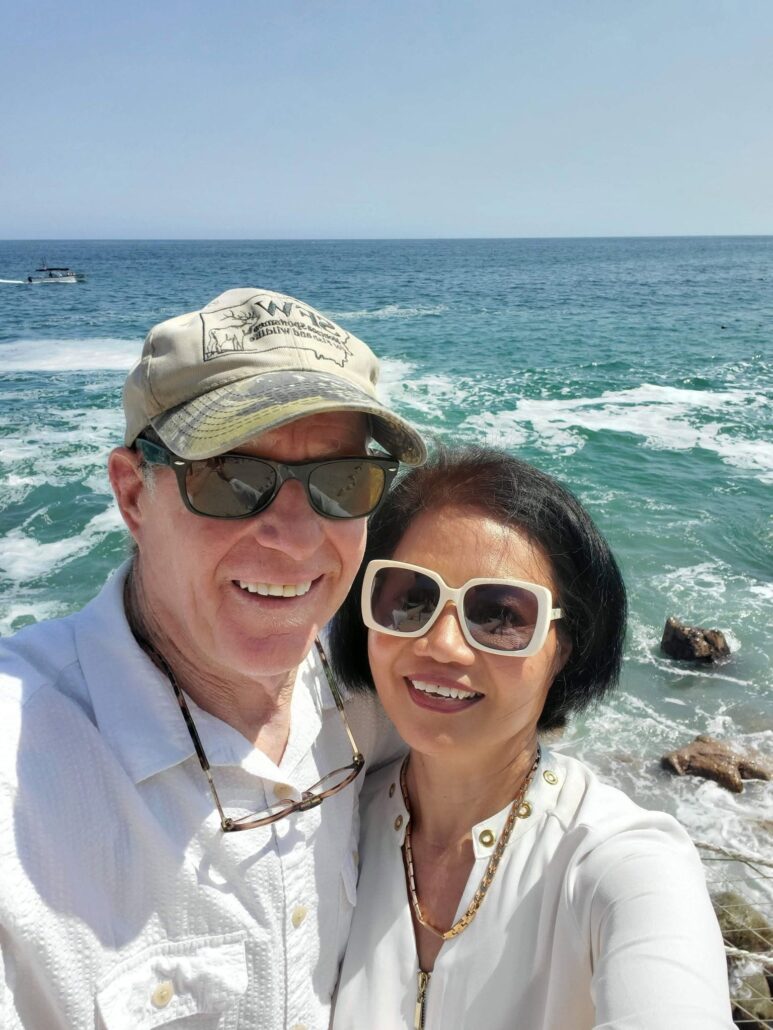
Richard and Indira Calkins, of Orange County, California, watched ten fiancées get interviewed at the Manila embassy the same day as Indira. Only two of the ten showed up with complete documentation and were actually ready. Indira was one of them, and her interview went smoothly because of it.
“𝐒𝐡𝐞 𝐰𝐚𝐬 𝐭𝐡𝐞 𝐨𝐧𝐥𝐲 𝐨𝐧𝐞 𝐨𝐟 𝐭𝐰𝐨 𝐰𝐡𝐨 𝐡𝐚𝐝 𝐚𝐥𝐥 𝐡𝐞𝐫 𝐝𝐨𝐜𝐮𝐦𝐞𝐧𝐭𝐚𝐭𝐢𝐨𝐧 𝐚𝐧𝐝 𝐰𝐚𝐬 𝐚𝐜𝐭𝐮𝐚𝐥𝐥𝐲 𝐩𝐫𝐞𝐩𝐚𝐫𝐞𝐝 𝐟𝐨𝐫 𝐭𝐡𝐞 𝐢𝐧𝐭𝐞𝐫𝐯𝐢𝐞𝐰…”“I am glad to say Olvis Immigration & Travel Services has helped me and my Fiancé with her K1 Fiancé Visa, and everything went smoothly. Out of the 10 ladies interviewed at the U.S. Embassy in Manila for their K1 Fiancé Visa on the day of my fiancé’s appointment. She was the only one of two who had all her documentation and was actually prepared for the interview.
Dan Borden credits the difference to preparation. Once his fiancée’s paperwork was organized properly ahead of time, she went into her interview without nerves and got through it cleanly.
“The call came the next afternoon and by Sunday we were 35,000 feet and on our way to San Francisco and the beginning of our new life.”
Joseph, a practicing attorney in Los Angeles, assumed his legal background meant he didn’t need help. He brought his own forms to double-check a few questions, and found that some of what the embassy had given him was outdated or simply incorrect. He ended up grateful for the second set of eyes on his paperwork.
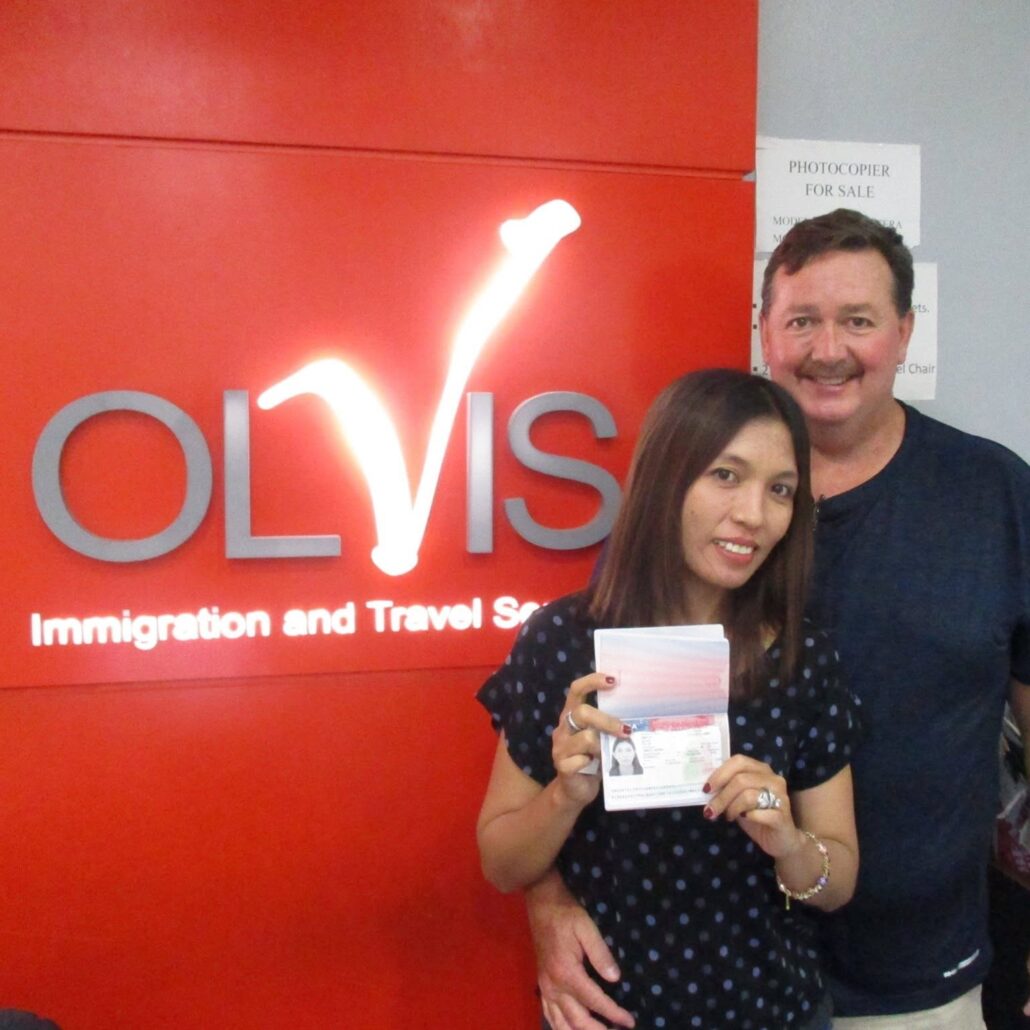
“I told Mike that I would not need his services, as I am an attorney practicing in Los Angeles and could do it myself, but that I had several questions about the forms. Mike said that he would be happy to assist in any way that he could, so I brought out the forms that the Embassy had provided…Mike showed me that some of the forms they had given me were the wrong ones and others were outdated. Indeed, after he further explained the whole visa procurement process to me in detail, I realized that I really needed help. Again, my sincere gratitude and thanks to you and your staff for the excellent professional and courteous service you provided us throughout the entire process.”
Where to Go Next
Not sure yet whether K-1 is even the right visa for your situation, engaged versus already married, kids in the picture or not? Read Which US Visa Do I Need: Fiancée or Spouse? first to confirm you’re on the right track before applying anything in this post to your case.
Sources & Further Reading
- USCIS I-864P, HHS Poverty Guidelines for Affidavit of Support — Official Government Source. Basis for the income threshold figures cited above.
- Nonimmigrant Visa for a Fiancé(e) (K-1) — U.S. Department of State — Official Government Source.
- DS-160: Online Nonimmigrant Visa Application — U.S. Department of State — Official Government Source. Confirms the DS-160 applies to K visa applicants and requires social media handle disclosure.
- Commission on Filipinos Overseas — Official Government Source (Republic of the Philippines). Background on the CFO’s role and its Guidance and Counseling Program for Filipinos marrying foreign nationals.
- Visas for Fiancé(e)s of U.S. Citizens — USCIS — Official Government Source.
Olvis Immigration and Travel Services is a proud member and affiliate of:
- ASIP — American Society of Immigration Professionals
- Department of Tourism, Philippines
- Philippine Retirement Authority (est. 1985)
- Cebu Chamber of Commerce & Industry (est. 1903)
- Love The Philippines — Philippine Department of Tourism
- National Privacy Commission, Philippines
- Cebu Council of Lions Clubs Presidents — Lions Clubs International
- Rotary Club of Cebu West
Ready to find out where your case actually stands?
Meet the Olvis team today.
This post gives general information about the K-1 fiancée visa process as of 2026. Fees, processing times, and specific document requirements change. Verify current requirements at uscis.gov and travel.state.gov before filing.
Leave a Reply
Want to join the discussion?Feel free to contribute!