
You Want to Bring Your Filipina Partner Home to the US — But Which Visa Actually Fits Your Situation?
Bottom line: If you’re reading this, you probably already know you want your partner with you in the US. What you might not know yet is which visa applies to your exact situation — engaged but haven’t met in person, already married, bringing her kids too, dealing with a medical condition, or untangling a past immigration issue.
Below are the real situations couples bring to us most and the visa path that actually fits each one.
Quick Answers
“What are K-1 fiancee visa requirements? ”
You’re a US citizen, both of you are legally free to marry, you’ve met in person within the last 2 years, and you intend to marry within 90 days of her arrival.
“Do I need a K-1 or a CR-1/IR-1 visa? ”
Engaged and not yet married means K-1.
Already married means CR-1/IR-1, regardless of how recently you married.
“Can children come on a K-1 visa?”
A child under 21 and unmarried qualifies for a K-2 visa alongside the parent’s K-1.
“Does a past visa overstay disqualify a K-1 petition? ”
Not necessarily or automatically. It changes the strategy and needs an individual case review before filing.
“I don’t know which visa I need.”
This is the question we hear most, word for word. The answer comes down to one thing:
Are you engaged or already married?
Here’s the distinctions:
- Engaged, not yet married → You will need a K-1 Fiancée Visa.
It lets her enter the US to marry you, with a 90-day window to do so after arrival.
- Already married → You need a CR-1/IR-1 Spousal Visa instead.
There’s no “fiancée visa for married couples”—the K-1 category legally requires you to still be unmarried when you file.
If you’re not sure which bucket you’re in yet — for example, you’re planning to get engaged on an upcoming trip — that’s fine. The visa decision doesn’t need to happen until you know the answer to that one question.
“We haven’t met in person yet — can we still start?”
Several couples come to us mid-planning: tickets booked, trip scheduled, but the meeting hasn’t happened yet. So here’s the rule that matters: the K-1 visa legally requires the couple to have met in person, at least once, within the two years before filing. Please take note that a video-chat relationship — even a long one — doesn’t satisfy this requirement.
But that doesn’t mean you’re stuck waiting indefinitely. Many of the couples we work with are exactly where you might be right now: relationship building over months of calls and messages, a trip already planned, and engagement expected during or shortly after that visit. The paperwork can be prepared in parallel — you don’t have to wait until you’re back home to start getting organized.
“We already got married — now what?”
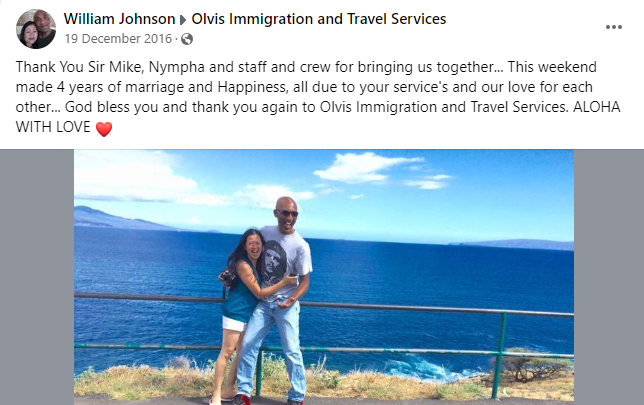
If the wedding already happened — in the Philippines, in the US, and it’s recognized in both countries — you’re on the CR-1/IR-1 spousal visa track, not the K-1. This applies whether you married recently or you’ve been married for a while and are only now ready to bring her home.
One detail that trips people up: if you married online or in a jurisdiction with different marriage laws, confirm the marriage is recognized as legally valid for immigration purposes before filing — this is worth a quick check before anything else moves forward.
“She has children from a previous relationship — can they come too?”
Yes — this is one of the most common situations we see, and it’s very solvable. A child under 21 and unmarried can be included as a derivative beneficiary.
- On a K-1 case, this is the K-2 visa for the child.
- On a CR-1/IR-1 case, the child follows through with a separate but connected petition
The key is starting both petitions together, not sequentially — filing for the parent first and “adding” the child later creates delays that are easy to avoid by planning for both from day one.
“A medical condition or disability limits my ability to travel.”
We’ve worked with clients who are disabled veterans, have medical conditions that restrict air travel, or otherwise can’t easily make repeated trips to the Philippines. This does not disqualify you from sponsoring a fiancée or spouse visa.
However, it does change how you’ll want to plan the required in-person meeting and any travel-dependent steps — worth flagging early in a consultation so the process is built around what’s actually feasible for you, not a generic timeline.
“My partner overstayed a visa, or there’s a past immigration issue.”
A prior visa overstay, a previous denial, or an existing fine doesn’t automatically end the possibility of a future petition — but it does change the strategy. These cases need to be evaluated individually; general online guidance often doesn’t account for how a specific prior issue interacts with a new petition. If this applies to you, this is exactly the kind of situation worth a direct conversation before filing anything.
“How long does this actually take, and when should I start?”
Most couples ask some version of this once they’ve decided to move forward. As a general planning range, a K-1 case typically runs 10-18 months from filing to your fiancée’s arrival in the US, but in some cases, it can be 24-36 months. While a CR-1/IR-1 spousal case runs on a similar or slightly longer timeline.
A Question We Get Asked a Lot Too
“Hi Olvis team, I just want to ask regarding your visa assistance. If we avail your service, kayo na po ba ang maghahandle ng buong visa process, including preparing and organizing the documents, forms, and evidence/proofs that we need to submit? Or may mga documents po na kami pa rin ang kailangang mag-prepare and edit ourselves? Also, kayo na rin po ba ang mag-guide sa amin from the beginning until the interview/visa decision? Thank you po!”
Here’s the full picture, using the K-1 Fiancé Visa as the example:
Processing Time: 8 to 10+ months on average.
Item Who Pays Amount
- Olvis Assistance Fee > Petitioner > $1,595.00
- USCIS Filing Fee > Petitioner > $675.00
- Visa Fee > Petitioner > ₱16,430.00 ( $265.00)
- Medical Exam > Petitioner > ₱ 34,100 ( $550.00)
Cost Breakdown: Around $3,085 – 3,500+ total, covering our fee plus government fees. These fees do not include a child/children applying for a K2 visa, when applicable. Current PH-US conversions also apply.
What’s included with Olvis service:
- Complete paperwork preparation and full support throughout the process
- Scheduling of the beneficiary’s biometric appointment, interview, and medical examination
- After signing up, we collect biographical information from both petitioner and fiancé(e) to determine the exact documents and requirements specific to your case.
- A comprehensive briefing session before the beneficiary’s interview at the U.S. Embassy in Manila — covering likely questions and what to expect on both the medical and interview at the embassy and later at the CFO (Commission on Filipino Overseas). And when necessary, we’ll advise your Filipina lady to ask for an interpreter to make sure the interview is guided and answered properly and increase the chance of approval.
In short: yes, we handle the process end-to-end — from paperwork through the interview decision — and we tell you upfront exactly what we need from you and when.
Follow-up question from the same conversation:
“Hi Olvis, gusto ko lang po sanang i-clarify tungkol sa mga evidence at documents. Kami po ba ang magbibigay ng lahat ng aming relationship evidence at supporting documents, tapos kayo na po ang mag-oorganize, mag-e-edit, magfo-format, at magco-compile ng lahat para sa K-1 visa application? Or kami po?”
Yes, kami na po sa lahat ng paperwork — we will coordinate with you also for the documents na needed. You provide the relationship evidence (photos, chat history, call logs, and similar proof); we organize, edit, format, and compile everything into what the petition actually needs.
“Halaa, ka-nice! All we need to do na lang po is print siya. — that’s the reaction we usually get once this part is clear, and it’s exactly the point: you gather the proof of your relationship, we turn it into a properly built application.
Now what’s the actual first step?
If you recognize your situation in any of the sections above, the next step isn’t a stack of paperwork — it’s a short conversation to confirm which path applies to you and what, specifically, you need to gather first. That’s what a free visa consultation is for: not a sales pitch, just clarity on your exact situation before you commit to anything.
Book a free visa consultation with the Olvis team today.
Toll-free from the USA direct to our Cebu City office.
1-877-226-6751, 10 AM–5 PM, Manila Time
We’re open daily, including Sundays and holidays.
“Do I Even Need Help With This?” — Common Hesitations Addressed
“I don’t think I need professional help — can’t I just figure this out myself?”
You can. But how many time you’d wanna do it? The forms are public, and plenty of couples do file on their own. What trips people up isn’t a lack of intelligence — it’s not knowing which forms are current, which evidence USCIS actually weighs, or how their specific situation (a prior marriage, a stepchild, a past visa issue) changes the standard checklist. A free consultation can tell you, honestly, whether your case is simple enough to DIY or complicated enough to need help — before you spend money either way.
“My situation feels too complicated — I doubt this will work for me.”
Nearly everyone who reaches out feels this way at first. Disability and travel limitations, prior divorces, stepchildren, past immigration issues — these are common variations we see regularly, not disqualifying exceptions. The scenarios earlier in this article exist because they’re the actual recurring situations people bring to us.
“How do I know I can trust an agency I found online?”
Look for a named, findable person — not just a logo — a physical office, and real third-party accreditations. We cover exactly what to check in more detail in [our guide on evaluating any visa consultant](https://www.olvis.com/) — worth reading regardless of who you choose to work with.
“It seems expensive for something I might be able to do for free.”
True DIY filing has no consultant fee, but it also has no safety net if a form is outdated or evidence is incomplete — and a rejected or delayed petition costs you months, which is often the more expensive outcome. Worth weighing both costs, not just the visible one.
“I’ve heard stories of visas getting denied — what if that happens to us?”
A denial is usually traceable to a specific, identifiable gap — not proof the process is broken. Starting with a clear understanding of what each visa actually requires (which is what this article is for) is the best protection against repeating a past mistake.
Since 1985. Real Words From Couples Who’ve Been Through This with Olvis Guidance
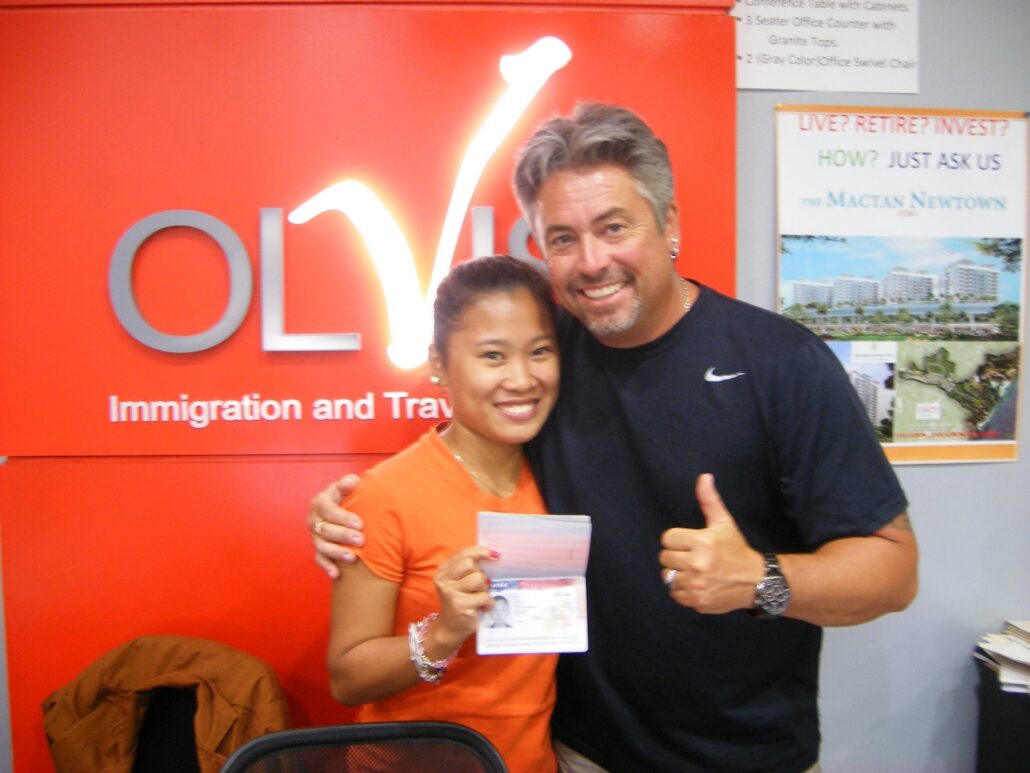
“We did it! Leah was successful with her interview at the embassy on Tuesday. She will be receiving her K-1 visa in a few days… I could not have done this alone.” — Bruce and Leah
“We are totally grateful, thankful, and blessed, surrounded by loving family and friends. Our life is full of joy to be with our precious children.” — Kathy Freeman, Cebu, Philippines
“Four months after my application with Olvis was filed with the USCIS, my fiancée was on a plane to the United States, sitting right next to me.” — Daniel Jobrack
Where to Go Next?
If you now know which visa fits your situation, the next real questions are cost, timeline, and what could go wrong.
That’s covered in [K-1 Fiancée & CR-1/IR-1 Spousal Visa: Real Cost, Timeline, and the Questions You’re Actually Asking.
Book a free phone consultation here on our website.
Olvis Is a Proud Member & Affiliate Of:
- ASIP — American Society of Immigration Professionals
- Department of Tourism, Philippines
- Philippine Retirement Authority (est. 1985)
- Cebu Chamber of Commerce & Industry (est. 1903)
- Love The Philippines — Philippine Department of Tourism
- National Privacy Commission, Philippines
- Cebu Council of Lions Clubs Presidents—Lions Clubs International
- Rotary Club of Cebu West
Sources & Further Reading
Official Government Source: Nonimmigrant Visa for a Fiancé(e) (K-1) — U.S. Department of State
https://travel.state.gov/content/travel/en/us-visas/immigrate/family-immigration/nonimmigrant-visa-for-a-fiance-k-1.html
Official Government Source: Visas for Fiancé(e)s of U.S. Citizens — USCIS
https://www.uscis.gov/family/family-of-us-citizens/visas-for-fiancees-of-us-citizens
Visas for Fiancé(e)s of U.S. Citizens
Disclaimer: This article is for general informational purposes and reflects USCIS and Department of State guidance current as of 2026. Every situation is different — the scenarios above are common starting points, not a substitute for an individual case review.